

The childcare industry faces a major turning point because traditional centers refuse to adapt to modern family routines. There is still a lack of flexibility in the policies and drop-off times of large daycare chains, as well as non-refundable monthly deposits. Understanding why parents choose drop-in over daycare reveals a huge market opportunity for agile business owners.
Modern parents want freedom, fast mobile bookings, and immediate trust. They do not want to sign restrictive annual contracts to get a few hours of reliable care each week. Drop-in centers step directly into this gap by offering clean, safe, and engaging environments with on-demand access.
In this blog, we will talk about how forward-thinking drop-in centers can dominate their local markets. You will also learn how to turn flexible scheduling into a powerful competitive edge that leaves traditional daycare centers far behind.
Key Takeaways
- The Modern Workforce Gap: Strict five-day daycare programs exclude millions of remote, hybrid, and shift-working parents who need flexible childcare options in 2027.
- Higher Margin Potential: Charging premium hourly rates or session packs allows drop-in centers to generate strong profit margins without relying on full-time enrollment contracts.
- Operational Control: Succeeding in the drop-in care vs full-time daycare landscape requires specialized daycare software to automate variable reservations, track ratios, and collect dynamic payments.
- Collaborative Growth: Drop-in operators can partner with traditional facilities to handle overflow enrollment, converting local competitors into active referral pipelines.
The Market Reality and Drop-In Childcare Trends 2027
The standard daycare setup simply does not match how families live and work today. Now, this means that rigid center rules, soaring prices, and long waitlists force parents to rethink their daily childcare choices.
Here is what the childcare landscape looks like in practice now:
- Massive Shortages Across Communities: According to the Center for American Progress child care deserts study, roughly 46 percent of children under age six live in an area with a severe shortage of licensed child care. Suburban and rural parents often spend over a year on waiting lists to hear back from a single center.
- Heavy Financial Strain on Family Budgets: The Center for American Progress access report highlights that center-based child care costs $13,180. This expense eats up 10 percent of the median income for married couples and over 30 percent for single parents.
- Paying for Unused Hours: Traditional centers force parents to pay for forty hours every week regardless of attendance. When a parent works from home on Fridays or takes a sick day, they still owe the full weekly bill for an empty seat.
- A Mismatch with Modern Work Routines: Millions of parents now work hybrid schedules, freelance, or run their own small businesses. These families want flexible, short-term coverage instead of locked-down contracts.
- The Rise of Smart Alternatives: The shift toward traditional daycare alternatives creates a huge opportunity for entrepreneurs. Drop-in centers step in to fill the gap by offering high-quality, pay-as-you-go care that fits real family schedules.
Drop-In vs Traditional Daycare: A Direct Comparison
Evaluating a drop-in child care center against a conventional program requires an objective look at economics, capacity management, and customer expectations.
The comparison below highlights how key operational pillars differ across both models:
| Operational Pillar | Traditional Daycare Center | Drop-In Child Care Center |
|---|---|---|
| Pricing Structure | Fixed weekly or monthly tuition | Hourly rates, daily passes, or multi-session packages |
| Schedule Requirement | Mandatory 3-day to 5-day fixed schedules | 100% on-demand or flexible advance reservation |
| Income Predictability | High baseline stability through long-term contracts | Variable baseline stabilized by recurring memberships |
| Initial Capital Expense | High (large facilities, complex outdoor play requirements) | Moderate (agile footprints in high-density retail zones) |
| Staffing Strategy | Static staff schedules based on fixed enrollment rosters | Dynamic shift scheduling tied to digital reservations |
| Revenue Per Child-Hour | Lower effective hourly return per enrolled seat | Higher premium rate per individual hour of care |
Economic guides such as how to start a drop-in daycare center indicate that while traditional programs depend on volume, a drop-in center commands a significantly higher hourly rate.
For instance, a standard facility charging $350 per week earns roughly $8.75 per hour for 40 hours of care. A drop-in center charging $16 to $22 per hour captures higher revenue per active child-hour. When you maintain high seat utilization throughout the day, the drop-in model generates strong gross profit margins while keeping overhead lean.
9 Ways Drop-In Centers Can Out-Compete Traditional Daycare
1
Sell Flexibility as Your Core Value Proposition
- Targeting the Modern Workforce Market: Market directly to shift workers, freelancers, and remote parents who desperately need flexible childcare options in 2027.
- Highlighted Total Cost Control: Show families that they only pay for the exact hours they use, making it a much smarter financial choice than fixed weekly billing.
- Eliminate Heavy Commitments: Emphasize the absolute freedom from rigid annual contracts, removing the heavy financial anxiety associated with traditional enrollments.
- Position as the Ultimate Solution: Present your business as one of the most reliable traditional daycare alternatives for families who refuse to pay full-time rates for part-time needs.
2
Turn Small-Group Ratios into a Core Marketing Asset
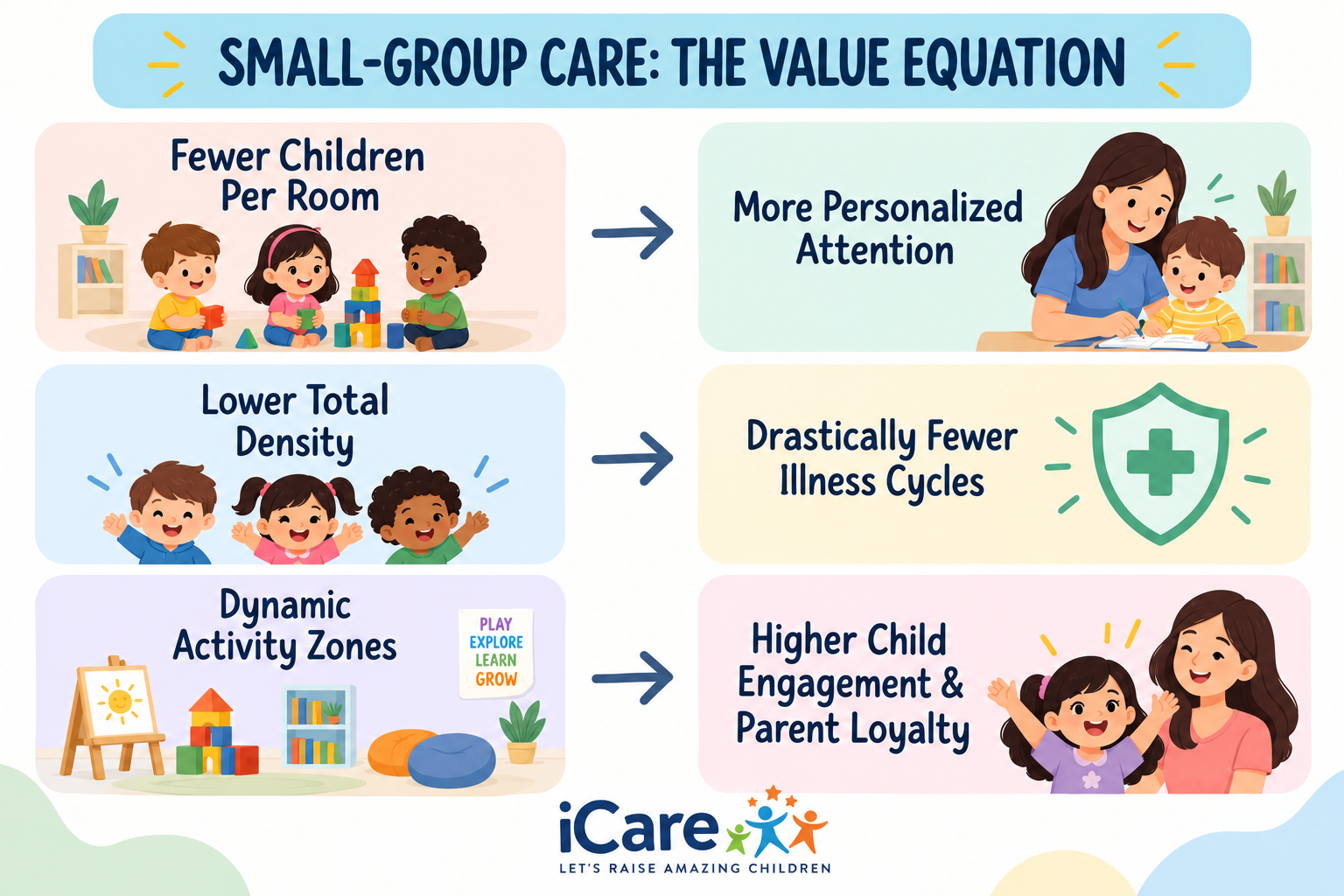
- Guarantee Personalized Attention: Explain how fewer children per room translates directly to more individualized engagement and better supervision from caregivers.
- Promote Health and Safety: Remind parents that lower density means significantly fewer spreading illness cycles in comparison to massive commercial centers.
- Create a Sensory-Friendly Space: Highlight that small, controlled groups reduce overwhelming noise and chaos, creating a calming learning environment for children.
- Showcase the Upside: Make sure the benefits of drop-in child care are visibly posted on your website and social media to reassure anxious first-time parents.
3
Compete on Caregiver Consistency Rather Than Headcount
- Combat Industry Turnover: Traditional centers suffer from notoriously high staff turnover; counter this by offering better wages and flexible shifts to retain top talent.
- Deliver Familiar Faces: Parents want to know their children are greeted by the same trusted professionals every single time they walk through the door.
- Build Trust Signals: Actively promote your low staff turnover rate as a primary reason why parents choose drop-in over daycare.
- Strengthen Community Bonds: When caregivers stay longer, they build genuine bonds with the children, reducing separation anxiety during drop-offs.
4
Build Overflow and Backup Care Partnerships
- Reframe the Competition: Instead of fighting local traditional centers, approach their directors to become their official, trusted backup care provider.
- Handle the Overflow: When established centers hit their legal capacity or close for staff training, they can confidently refer stranded families to your facility.
- Drive Zero-Cost Referrals: This strategy creates a reliable, ongoing referral engine that drives steady traffic to your drop-in child care center.
- Unlock Corporate Tie-ins: Partner with local businesses and hospitals that want to offer emergency backup care as an attractive employee perk.
5
Extend Operating Hours Where Traditional Centers Can’t
- Provide Evening Availability: Keep your doors open until 8:00 PM or 9:00 PM to capture parents working late shifts or couples enjoying a date night out.
- Dominate Weekend Coverage: Offer Saturday care, a massive blind spot for standard centers, giving you a complete monopoly on weekend gig-workers and retail employees.
- Support Early Morning Drops: Open earlier than competitors to support medical professionals and first responders who start their shifts long before dawn.
- Stand Out Instantly: Expanding your hours is the absolute best answer to the question of how to attract parents to a drop-in daycare when the local market feels crowded.
6
Digitize the Entire Parent Journey
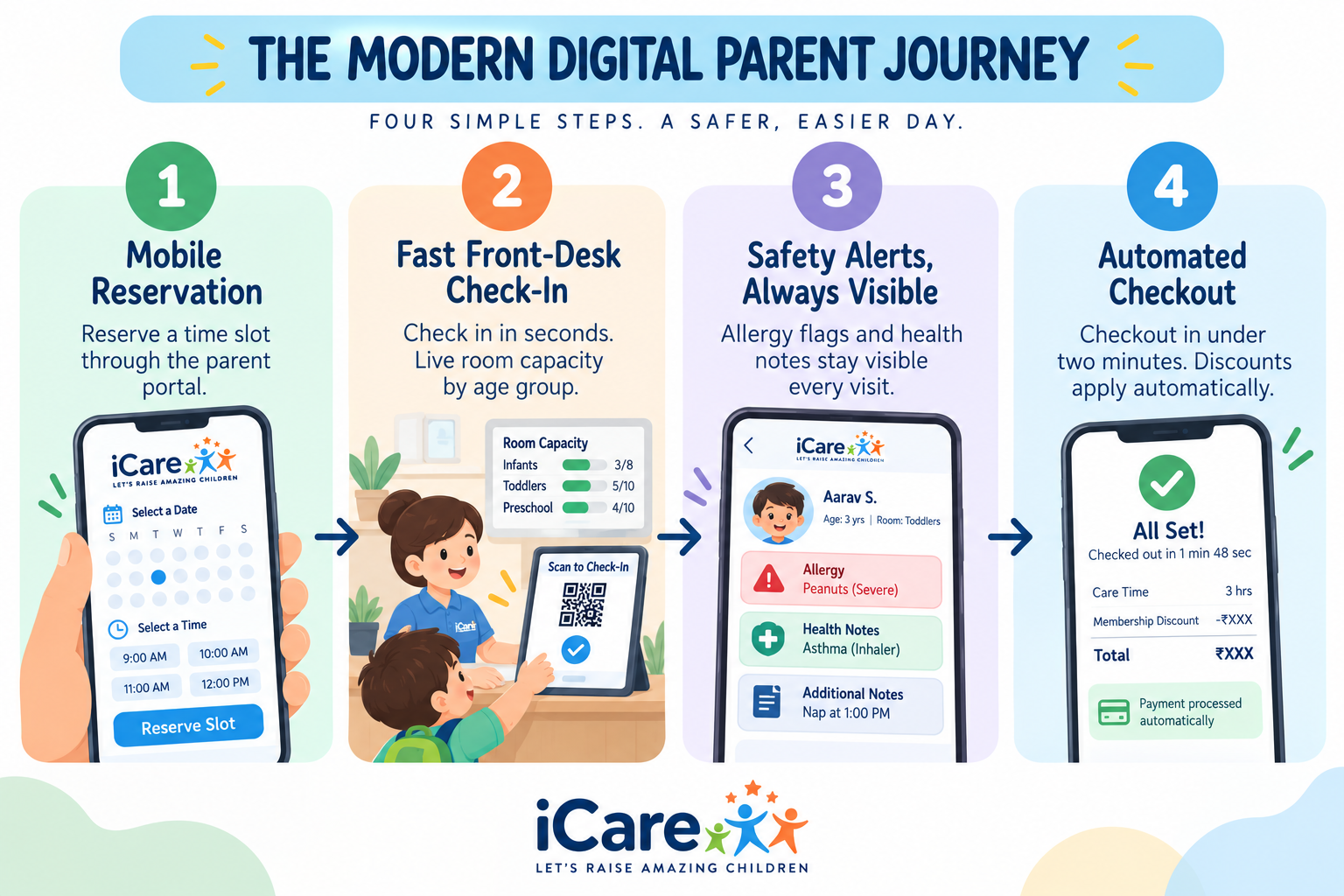
- Deliver a Mobile-First Experience: Parents expect to manage their lives on their phones; offer a seamless digital portal where they can reserve open slots instantly.
- Run Contactless Operations: Use modern technology for secure digital check-ins, automated medical waivers, and instant contactless payments.
- Send Live Updates: Push real-time photos and incident reports directly to a parent’s smartphone to build immediate trust and peace of mind.
- Deploy the Right Tech Stack: Implement specialized iCare’s drop-in service and scheduling tools to run this entire digital experience smoothly without crashing your front desk.
7
Establish a Resilient Hybrid Revenue Model
- Stabilize Predictable Cash Flow: Relying solely on unpredictable walk-ins is risky; stabilize your baseline income by offering monthly membership tiers.
- Use Smart Packaging: Sell 10-hour or 20-hour session packs upfront to lock in revenue while still offering parents complete scheduling flexibility.
- Optimize Your Margins: A highly profitable drop-in daycare pricing model blends recurring subscription revenue with premium-priced walk-in hourly rates.
- Avoid Empty Seats: Use data from your software to forecast historically slow days and run targeted promotions to fill those specific gaps.
8
Make Safety and Screening Audits Visible to the Public
- Practice Radical Transparency: Counter the outdated stigma that flexible care is somehow less secure by publishing your strict safety protocols online.
- Display Visible Credentials: Proudly display state licensing records, staff background check standards, and daily sanitization logs right in your front lobby.
- Host Facility Tours: Schedule regular open houses for families to observe your facility’s cleanliness, security, and layout before signing up.
- Win the Comparison Game: When parents evaluate drop-in care vs full-time daycare, highly visible safety measures usually tip the scales permanently in your favor.
9
Dominate Local Search and Digital Social Proof
- Focus on Local SEO: Traditional daycares often rely on old-school word of mouth; outrank them online by aggressively optimizing your Google Business Profile.
- Automate Review Generation: Set up automated emails requesting positive reviews from parents right after they pick up their happy child from a successful session.
- Publish Targeted Content: Write localized blog posts about the future of childcare and how your specific center directly serves your local community.
- Optimize Service Pages: Create dedicated, easy-to-read landing pages detailing your pricing and flexible hours so local parents find you exactly when they search for immediate care.
Where a Drop-In Naturally Wins (and Where It Doesn’t)
A drop-in model’s distinctive advantages must be weighed against its real structural limitations if operators want to make smart business decisions.
Where Drop-In Daycare Wins
- Cost Efficiency Against Private Nannies: Drop-in centers can save taxpayers hundreds of dollars per year compared to private nannies. As outlined in industry resources on drop-in daycare vs. nanny services, hiring a dedicated in-home nanny costs anywhere from $22 to $35+ per hour out of pocket. Drop-in centers provide structured group supervision and peer socialization at a fraction of the cost of private schools.
- Elimination of Paid Absences: In traditional centers, parents pay full tuition regardless of family vacations, mild childhood illnesses, or personal days off. Drop-in models ensure families only spend money when their child is actively present.
- Rapid Customer Acquisition: Low financial commitment allows parents to test your center for a single afternoon without signing a binding year-long agreement.
Where Traditional Daycare Retains an Advantage
- Predictable Long-Term Cash Flow: Traditional operators lock in multi-month contracts, making financial forecasting, capital planning, and bank debt financing easier to secure.
- Multi-Year Developmental Continuity: Children who attend the exact same classroom five days a week build multi-year relationships with specific lead teachers and consistent peer cohorts.
- Organic Search Dominance: Legacy centers that have occupied physical locations for decades often possess high domain authority and deep brand awareness across their local school districts.
The Operational Engine: Why a Childcare Management Software Decides the Winner
Operating a flexible childcare facility is far more operationally demanding than running a traditional static daycare. When twenty children arrive and depart at completely different times throughout the day, manual paper tracking and spreadsheets fail immediately.
If your staff miscalculates child-to-teacher ratios or loses track of emergency contact details during a sudden intake rush, you risk state licensing penalties and customer churn.
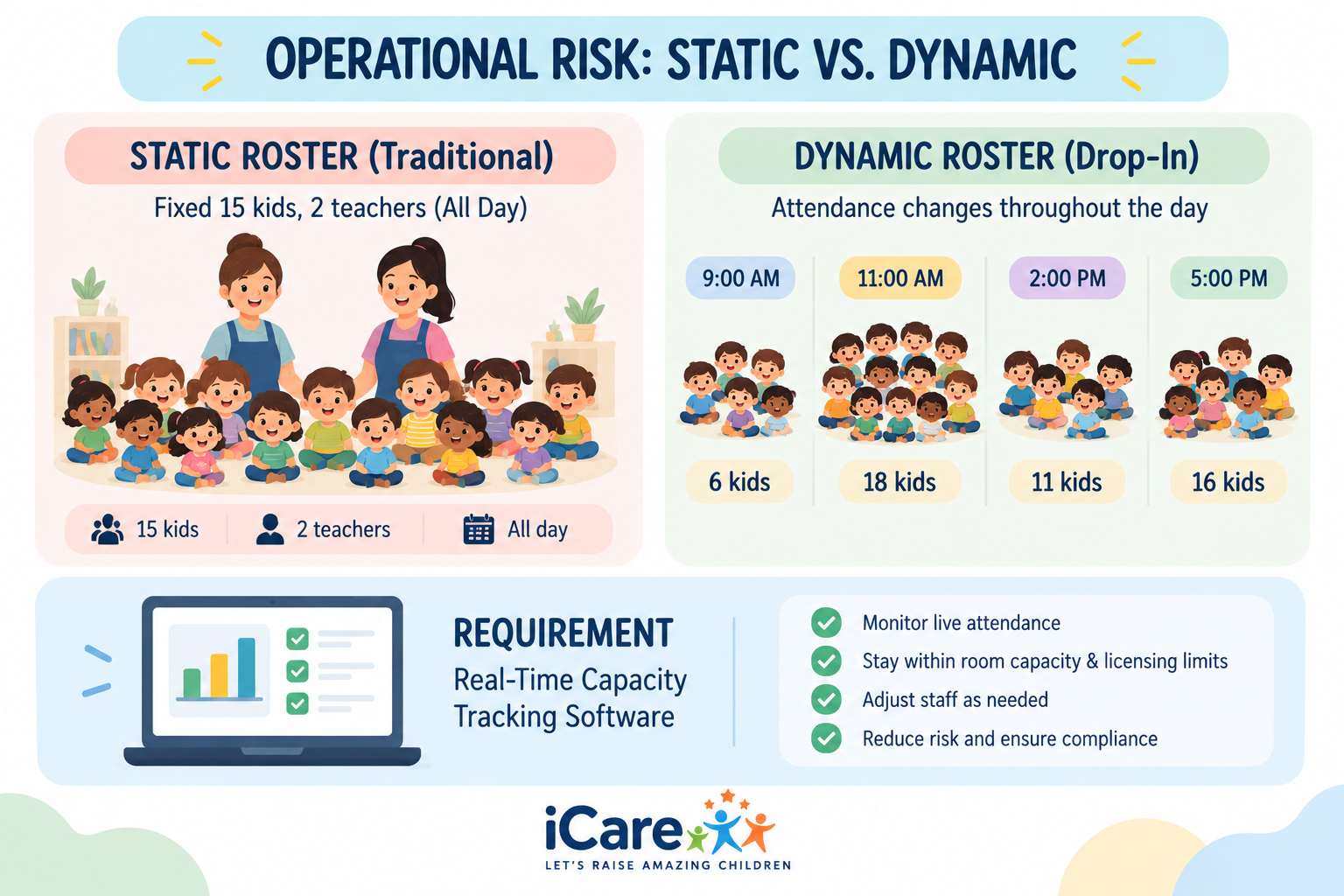
Now, to eliminate operational bottlenecks, forward-thinking directors deploy comprehensive daycare management software tailored to variable enrollment patterns.
Modern platforms solve these complex operational challenges across several core functions:
- Automated Capacity and Ratio Tracking: The system calculates live child-to-caregiver ratios as families check in and out, automatically closing reservation windows when rooms hit legal capacity limits.
- Dynamic Hourly Billing: Specialized platforms track billable minutes automatically, charging stored payment methods according to pre-set package rates, late pickup penalties, or meal add-ons without manual data entry.
- Digital Paperwork Management: Digital enrollment portals collect immunization records, emergency contacts, and allergy disclosures before parents arrive, incorporating workflows (as highlighted in our drop-in revolution digital forms guide).
- Multi-Location Operational Oversight: Owners operating multiple facilities maintain centralized real-time visibility across revenue metrics, staff payroll hours, and occupancy levels from a unified dashboard.
Therefore, deploying specialized childcare software for drop-in centers protects your margins, maintains regulatory compliance, and ensures an effortless booking experience for every parent.
Frequently Asked Questions
What is drop-in child care?
Drop-in child care offers short-term supervision on demand. Families skip long-term contracts. Payments cover exact hours used.
Is drop-in care cheaper than full-time enrollment?
Pay-per-use plans save money when parents need occasional hours. Full-time enrollment offers lower hourly rates during forty-hour weeks.
Why do directors choose the best childcare management software?
Directors select the best childcare management software because automated booking platforms handle fluctuating ratios instantly. Digital registration eliminates administrative paperwork burdens.
How does modern daycare software help flexible centers?
Robust daycare software tracks dynamic room capacity automatically. Digital check-ins eliminate manual attendance mistakes.
Can an independent drop-in center out-compete corporate chains?
Flexible centers win local families by offering night and weekend availability. Large corporate chains stay locked in rigid daytime schedules.
What role does daycare management software play in compliance?
Specialized daycare management software maintains child-to-caregiver ratios automatically. Automated alerts prevent overbooking inside classrooms.
Which features define the ideal childcare software platform?
Powerful childcare software includes mobile check-ins, automated billing, and live parent messaging. Smart systems handle dynamic scheduling effortlessly.
How does childcare management software increase revenue?
Purpose-built childcare management software calculates fractional hourly usage automatically. Built-in billing engines collect payments instantly without administrative delays.
Conclusion
The early childhood education market rewards adaptability today. Legacy providers rely on rigid contracts, but modern parents demand schedule freedom. Implementing specialized childcare management software positions your facility as a clear market leader.
Agile drop-in centers capture high-margin revenue by filling empty classroom seats. Flexible scheduling, transparent safety standards, and extended operating hours create immediate customer loyalty. Utilizing modern daycare management software streamlines daily operations and eliminates manual administrative mistakes.
Transform your childcare operations today. Book an iCare platform demo and discover how digital check-in tools automate dynamic scheduling instantly.